TECHNICAL REPORTS

EVALUATION OF TRIAL SHIPMENTS OF CUT FLOWERS AND FOLIAGE TO AUSTRALIA

A scoping study was undertaken by PHAMA in late 2011 to assess the potential for developing cut flower and foliage exports to Australia (PHAMA Activity SOLS04; Technical Report 16). This study, which reviewed supply conditions in Solomon Islands as well as market conditions in Australia, concluded that there was sufficient potential, particularly for selected orchid varieties (Vandas and Spiders) and various forms of foliage (especially Crotons), to warrant further support for trial shipments to test the viability of the export pathway under commercial conditions, and

Read More »

SAMOAN TARO EXPORT DEVELOPMENT WORKSHOP OUTCOMES

SAMOA3.1 (see PHAMA Technical Report 14). These workshops, which involved farmers, exporters, key government staff and staff from various other Samoan agencies, were designed to: Explain the key findings of Activity SAMOA3.1; Build consensus of what needs to be done to build sufficient export volume to enter the New Zealand market; Outline quality and volume issues on the supply side with a view to ensuring demand-side aspects of the value chain are understood; Act as a catalyst for discussion on the development of an overall

Read More »

ACCREDITATION OF SAMOA COPRA MEAL FACILITY FOR EXPORT TO AUSTRALIA

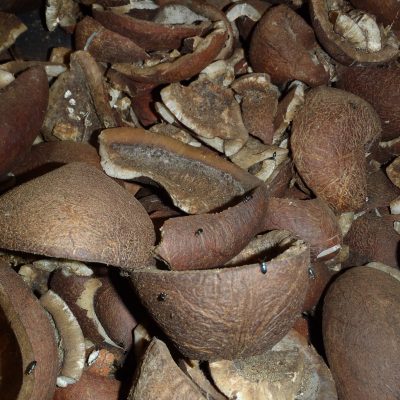
The export of coconut products is an important commodity trade for Samoa. The trade has gone through fluctuations after peaking in the 1980s. In recent years, coconut oil exports have increased again on the back of price increases. There is now only one copra processor in Samoa. This is Petroleum Product Services (PPS), which exports coconut oil to Malaysia and Singapore, and copra meal to New Zealand and the United States of America. Exports of both products by PPS have been increasing significantly in the

Read More »

FEASIBILITY STUDY OF SELECTED HORTICULTURAL EXPORTS FROM FIJI TO AUSTRALIA

The Fiji Market Access Working Group (MAWG) requested that the Pacific Horticultural and Agricultural Market Access Program (PHAMA) conduct preliminary export feasibility studies for six horticultural products to determine whether there is merit in pursuing formal market access arrangements for the Australian market. A study was undertaken during January–February 2012 in Fiji and Australia to assess the commercial prospects for the six commodities identified by the Fiji MAWG. During the course of the study, okra was identified as having significant promise, so the list was

Read More »

POTENTIAL FOR CUTFLOWER AND FOLIAGE EXPORTS TO AUSTRALIA

While flowers have been utilised for centuries in Solomon Islands, commercial floriculture is relatively new. Today over 50 floriculture producers market through the Honiara Central Market on a regular basis, with around 500 households involved in the regular production of flowers for commercial purposes. Honiara has around 30 part-time florists, although there is just one full-time florist. Commercial trade in indigenous orchids from some of the more distant provinces into Honiara is beginning. There are currently no exports. Floriculture in Solomon Islands is ideal for

Read More »

OPTIONS FOR THE MANAGEMENT OF FRUIT FLY SPECIES ON ROTUMA ISLAND

The fruit fly study undertaken during August–November 2011 comprised: An analysis of trapping and fruit sampling data to confirm the distribution of Bactrocera kirki within Fiji territories; A review of heat tolerance research undertaken in the Pacific to determine whether the current heat treatment used by Fiji for B. passiflorae and B. xanthodes will also kill B. kirki; and A scoping study to determine if B. kirki could be eradicated from Rotuma. Key words: fruit fly, host, Bactrocera kirki, plant protection, heat treatment, HTFA

Read More »

RE-ACCREDITATION OF BSE FREE STATUS FOR VANUATU BEEF TO AUSTRALIA

This submission is intended to provide appropriate information to Food Standards Australia New Zealand (FSANZ) on the BSE status of Vanuatu to enable a risk assessment to be conducted for the existing trade in beef imports from Vanuatu into Australia. The submission is made in accordance with the FSANZ Imported Food Notice 06/11 regarding the end of interim arrangements under Australia’s BSE Food Safety Policy on June 30 2011. Key words: meat and bone meal, greaves, BSE, stock feeds, veterinary service, infection, bovine, beef, diagnostics,

Read More »

DEVELOPING EXPORTS OF SAMOAN TARO TO NEW ZEALAND

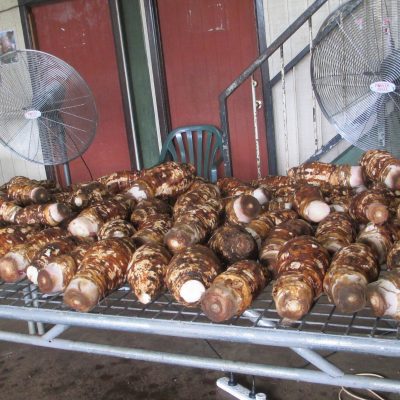
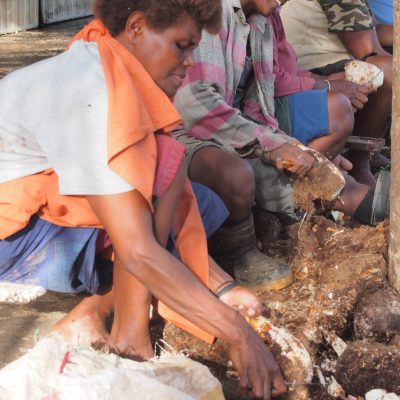
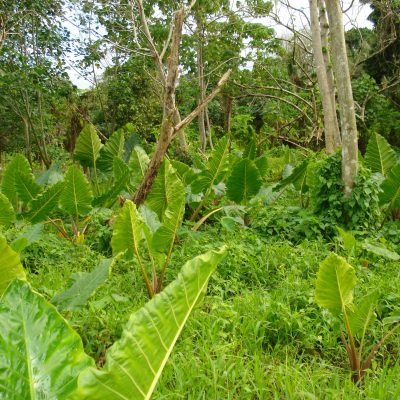
The occurrence of taro leaf blight (TLB) in 1993 effectively destroyed Samoa’s taro industry and reduced exports to zero for a number of years. Following an extensive period of research and development, Samoa has now produced a range of TLB-resistant taro varieties. Government has directed that taro exports be considered as part of the industry’s revitalisation. Intervening years have seen Fiji establish itself as the dominant taro exporter to New Zealand, with 95% market share. Samoa is now looking to re-establish itself in the New

Read More »

ASSESSMENT OF POTENTIAL GINGER EXPORT ISSUES TO AUSTRALIA

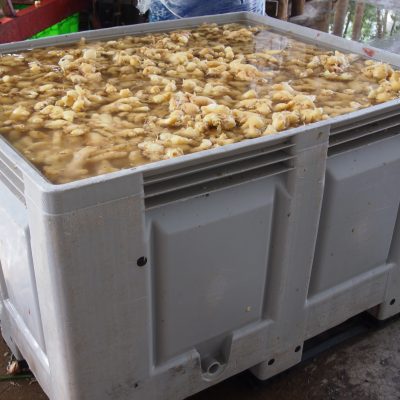
Historically, Fiji exported significant volumes of fresh mature ginger to North America and New Zealand. These markets were subsequently lost to Asian ginger suppliers. The focus of ginger exports has since shifted towards immature and processed ginger. The Japanese market has potential, however, the extent of exports to Japan at the current time is unclear. Key words: production, pathogens, pests, markets. United States of America, Canada. New Zealand, Japan, Australia, access, quarantine, biosecurity

Read More »

EXPORT ISSUES FOR FIJI TARO TO AUSTRALIA AND NEW ZEALAND

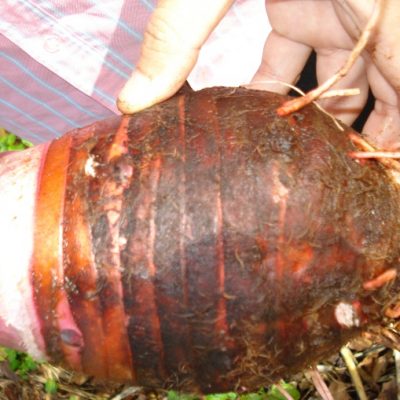
There has been considerable focus in recent years on the taro export supply chain in Fiji, and the Pacific as a whole, with the objective of improving and expanding export opportunities. There are still, however, significant impediments that are yet to be overcome before this objective can be achieved. Major quality and phytosanitary issues in the supply chain continue to hinder current access, and, if left unchecked, could result in a reduction in opportunities rather than a desired expansion. Key words: Taro, taro corms, quarantine,

Read More »

EXPORT ISSUES FOR SAMOAN TARO TO AUSTRALIA AND NEW ZEALAND

Samoa has made significant and commendable achievements in re-establishing the security of their domestic taro industry following its devastation by Taro leaf blight in 1993. Domestic production is now at the point where export markets could be pursued in an attempt to regain a considerable share of these markets. There are, however, significant impediments that would need to be overcome before Samoa could enter and be competitive in these markets. Under Australia’s recently proposed conditions for global taro corm imports Samoa would be excluded from

Read More »

INVESTIGATION OF DIAGNOSTIC REQUIREMENTS TO SERVICE VARIOUS VALUE-ADDED INDUSTRIES

Preliminary market access priorities were identified by the Vanuatu Market Access Working Group in February 2011 and included in the Pacific Horticultural and Agricultural Market Access Program (PHAMA) 3-Month Strategic Plan for April to June 2011. This report covers one of the two priorities included for Vanuatu – investigation of diagnostic requirements to service various value-added industries. The value-added industries included in the terms of reference for this study were cocoa, copra meal, virgin coconut oil, kava, vanilla and small quantities of other spices. During

Read More »

REPORT ON GIANT AFRICAN SNAIL IN SOLOMON ISLANDS

Since first being detected in 2006, Giant African Snail (GAS) has spread widely in and around Honiara and to several areas on Guadalcanal. To date GAS has only been identified in two provincial areas: eradication appears to have been achieved at Noro while the response is in its early stages at Makira. However, due to limited surveillance and awareness in provincial areas, GAS may be distributed more widely than currently understood. Eradication is beyond the resource capability of the Solomon Island Quarantine and Inspection Service

Read More »

VIABILITY OF THE HTFA FACILITY AS A TREATMENT OPTION FOR THE EXPORT OF FRUIT FLY HOST COMMODITIES TO NZ

he costs associated with transporting, treating and exporting fruit to New Zealand from Vanuatu are relatively expensive, although they are not at present considered to be too prohibitive to prevent exports of higher value products such as limes and eggplant. There are, however, a number of risks associated with this export pathway which at this time outweigh any potential benefits of its reestablishment. Key words: lime, eggplant, papaya, fruit fly, fruit fly host, HTFA, methyl bromide fumigation, quarantine, biosecurity 

Read More »

DRAFT REVIEW OF IMPORT CONDITIONS FOR FRESH TARO CORMS – RESPONSE TO BIOSECURITY AUSTRALIA

The Draft Review of Import Conditions for Fresh Taro Corms was released for public comment by Biosecurity Australia on 1 March 2011 and the Pacific Horticultural and Agricultural Market Access program (PHAMA) submit comments for consideration prior to finalisation of this review policy. Key words: taro, taro corms, Fiji ginger weevil, taro beetles, taro plant hopper, taro leaf blight, taro vein chlorosis virus, nematode, pest management, risk management

Read More »

FEASIBILITY STUDY OF DIMETHOATE DIP TREATMENT TO FACILITATE THE EXPORT OF FRUIT FLY HOST COMMODITIES TO FIJI

The purpose of this report is to outline the feasibility of developing a sustainable fruit fly risk mitigation pathway for fruit fly host commodities using dimethoate dipping, for Tonga into Fiji. The report is structured into: Recommendations for the Tongan Market Access Working Group (TMAWG) An overview of the use of dimethoate as a biosecurity treatment in the region Discussion on the fruit flies in Tonga that are likely to be of quarantine concern Follow-up desk, lab and field based activities. Initial discussions on the

Read More »

REVIEW OF THE DIAGNOSTIC REQUIREMENTS TO ASCERTAIN COCOA AND COPRA MEAL QUALITY STANDARDS

Cocoa exports are of increasing importance to Solomon Islands and significant efforts are being made by the industry with donor assistance to increase production, improve export returns and quality. Current legislated quality standards and testing capacity are recognised by industry as being inadequate when compared to the quality requirements of targeted export markets. The industry wishes to develop a new quality standard based on target market requirements and to establish access to adequate quality testing capacity to support market access, protect exporters against reduced payments

Read More »